Book
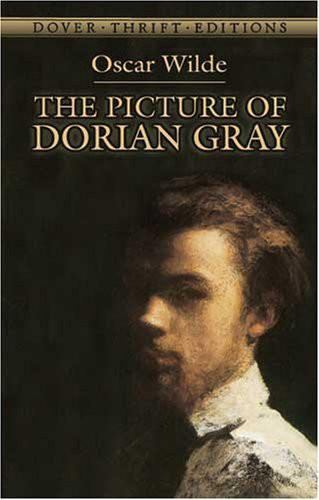
The Picture of Dorian Gray
Celebrated novel traces the moral degeneration of a handsome young Londoner from an innocent fop into a cruel and reckless pursuer of pleasure and, ultimately, a murderer. As Dorian Gray sinks into depravity, his body retains perfect youth and vigor while his recently painted portrait reflects the ravages of crime and sensuality.
Amazon.com Review
A lush, cautionary tale of a life of vileness and deception or a loving portrait of the aesthetic impulse run rampant? Why not both? After Basil Hallward paints a beautiful, young man's portrait, his subject's frivolous wish that the picture change and he remain the same comes true. Dorian Gray's picture grows aged and corrupt while he continues to appear fresh and innocent. After he kills a young woman, "as surely as if I had cut her little throat with a knife," Dorian Gray is surprised to find no difference in his vision or surroundings. "The roses are not less lovely for all that. The birds sing just as happily in my garden."
Read moreShow less
As Hallward tries to make sense of his creation, his epigram-happy friend Lord Henry Wotton encourages Dorian in his sensual quest with any number of Wildean paradoxes, including the delightful "When we are happy we are always good, but when we are good we are not always happy." But despite its many languorous pleasures, The Picture of Dorian Gray is an imperfect work.
Compared to the two (voyeuristic) older men, Dorian is a bore, and his search for ever new sensations far less fun than the novel's drawing-room discussions. Even more oddly, the moral message of the novel contradicts many of Wilde's supposed aims, not least "no artist has ethical sympathies. An ethical sympathy in an artist is an unpardonable mannerism of style." Nonetheless, the glamour boy gets his just deserts.
And Wilde, defending Dorian Gray, had it both ways: "All excess, as well as all renunciation, brings its own punishment."
From School Library Journal
Grade 10 Up-"The Whole Story" format provides illustrations and annotations to the classic text. Ross's lively and sophisticated cartoons add interest, and historical information helps readers place the novel in proper context and gives insight into its characters. The problem with this attractive, glossy layout, however, is that the text and the quotes pulled from it are not always on the same page.
Further, some illustrations and notations visually cut into the narrative and may distract readers. For example, a drawing appears on the first page along with the passage, "In the centre of the room, clamped to an upright easel, stood the full-length portrait of a young man of extraordinary personal beauty," but that quote does not appear until the second page of the story.
Useful as a supplement to the original novel, but not a replacement for it.
Karen Hoth, Marathon Middle/High School, FL
Copyright 2001 Reed Business Information, Inc.
- Author
- Oscar Wilde
- Publisher
- Book Jungle
- Published
- 1910
- Formats
- AZW3, EPUB, MOBI
- Length
- 246 pages
- Reading time
- About 4½ hours
- First published
- 1890
- ISBN
- 9780486278070
- In the library since
- October 2026
- Look it up
- Goodreads ↗